How Dual-Spectrum Imaging Supports Forward Obstacle Detection for Trains
MegaFeis combines visible-light and thermal imaging to support forward target detection at distances of 1.5–2 km, depending on the target and operating conditions. Onboard analytics and cab displays connect image capture, potential hazard detection and driver alerts.
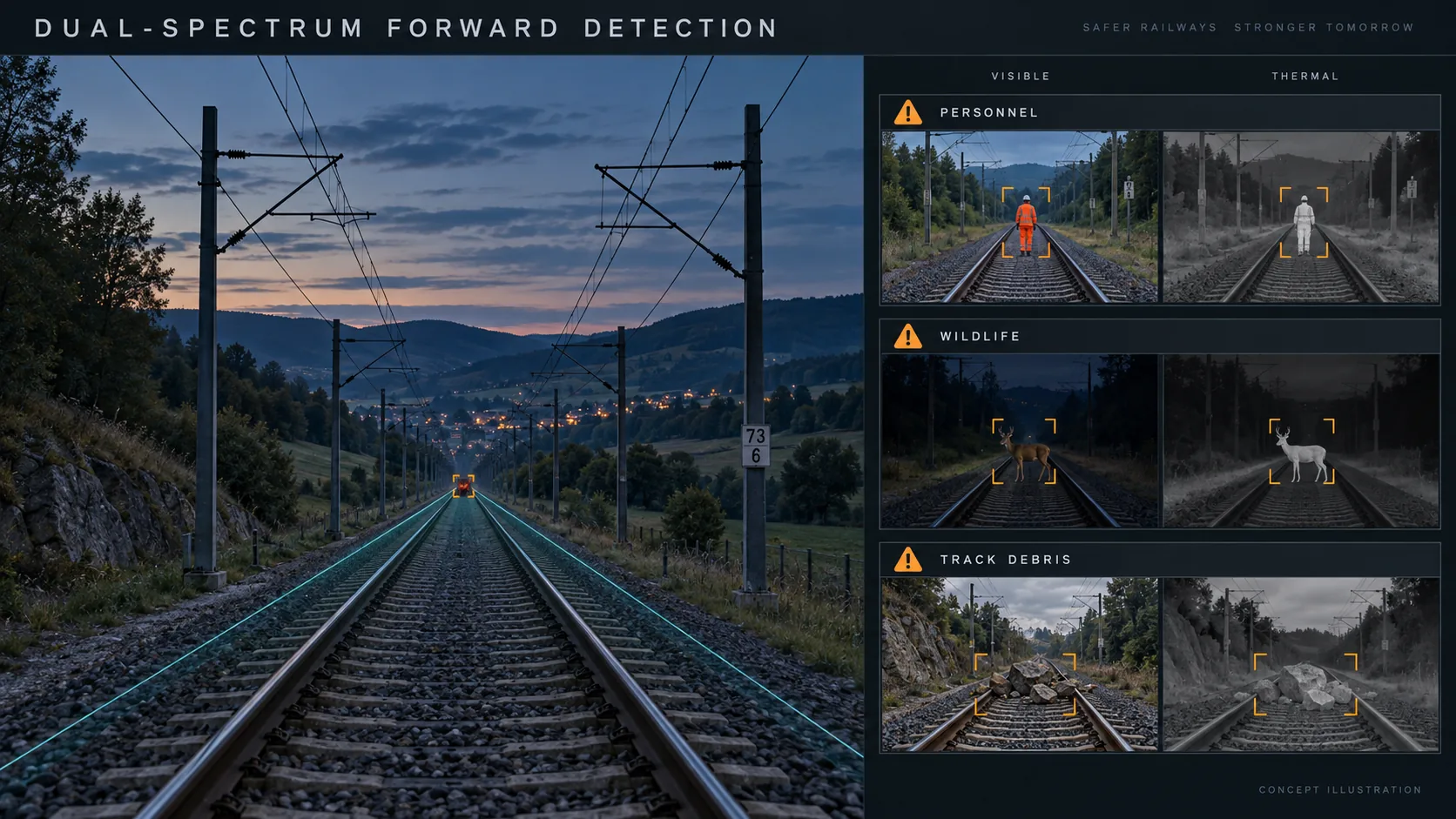
Combining Visible-Light and Thermal Imaging
Visible-light cameras capture scene details, while thermal cameras form images from differences in infrared radiation between targets and their surroundings. Together, they help monitor obstacles, people and animals ahead of the train, including at night. Rain and fog can reduce detection performance.
From Image Capture to In-Cab Alerts
Forward-facing cameras supply images to the onboard analysis system. The system assesses each detected target’s position and potential impact on train safety, then presents alerts alongside the relevant images on the cab display for the driver to assess.
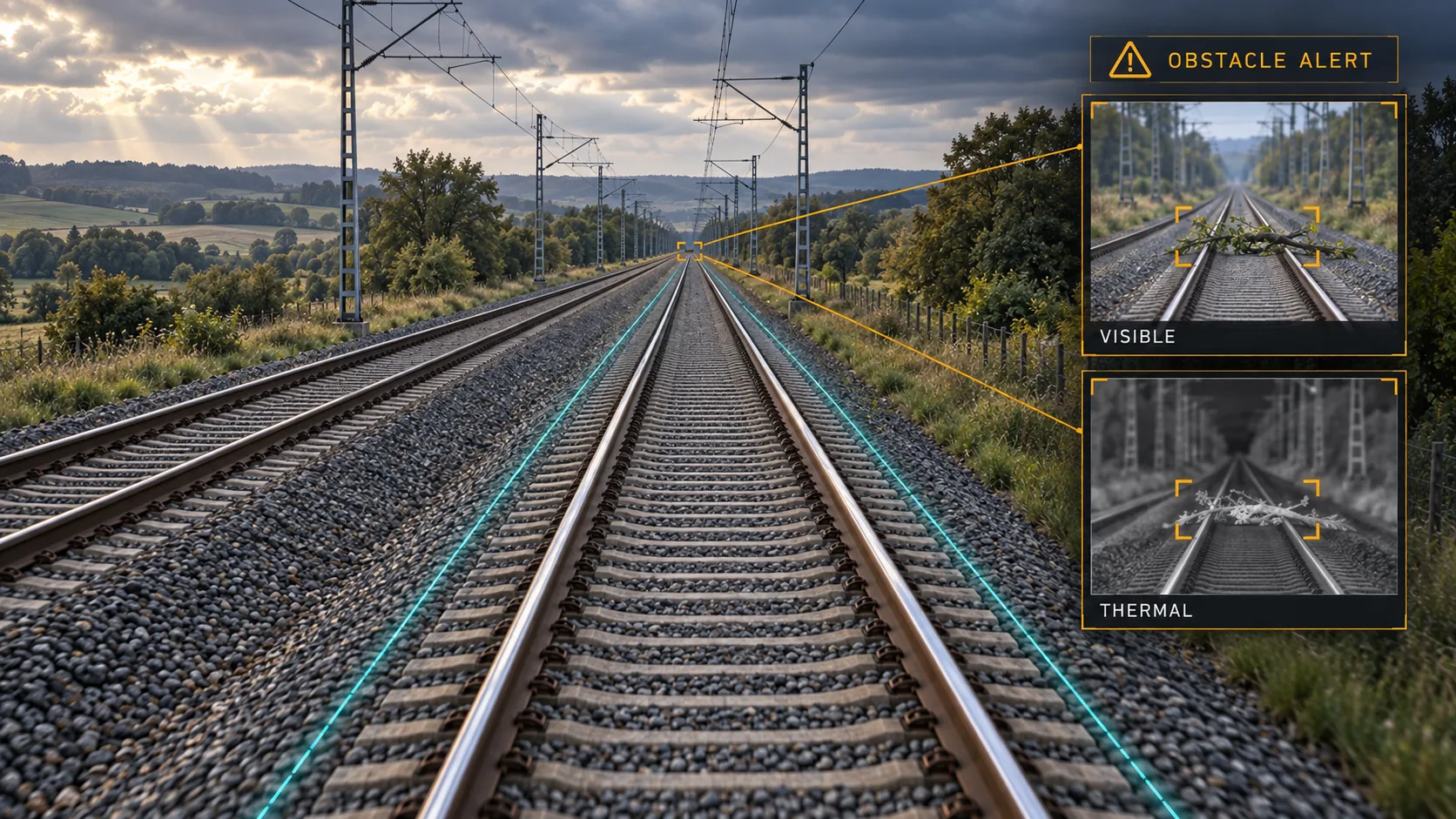
Lessons From the Carmont Derailment
In 2020, a passenger train derailed at Carmont, Scotland, after striking debris washed onto the track from a drainage trench. The investigation identified problems with drainage construction and the operational response to severe weather. The case illustrates the need for multiple layers of protection. Optical monitoring should complement infrastructure maintenance, weather monitoring and operational measures.
Frequently Asked Questions
Does the 1.5–2 km detection range mean every target will trigger an alert at that distance?
No. After detecting a target, the system assesses its position and potential impact on train safety. Alerts are intended for targets intruding onto the track that could affect safe train operation, rather than every object in view. Actual detection and alert distances depend on target size, thermal contrast, weather and available line of sight.
Does an alert automatically apply the train’s brakes?
No. The system provides driver assistance through forward monitoring and hazard alerts. It does not issue automatic braking commands or directly control the train’s brakes.